
Checking Criminal History in Reform
Reform does not offer one online criminal-record database. City Hall is the starting point for current police routing and municipal court questions. Pickens County offices answer county custody and prosecution questions. Just One Look supplies paid remote access to Alabama trial-court information, while ALEA Form 46 provides a fingerprint-based review of your own state history.
- Call Reform City Hall and ask for the current police or records contact for a city incident report.
- Ask municipal staff for the proper written request route, fee, identification rule, and expected response.
- Contact the municipal clerk with a full name, citation or case number, court date, and charge.
- Use the Pickens roster or sheriff telephone line for county custody, then the Circuit Clerk for a county case.
- Use Just One Look for remote Alabama court access or Form 46 for your own fingerprint-matched ALEA record.
This Reform order keeps a Reform police report distinct from a Reform municipal citation, jail entry, judicial case, and repository history. A no-result at one Reform level does not rule out a record in another.
Reform Police Records Lack a Portal
The official Reform website gives City Hall as the practical records-routing point. It does not publish a separate police page, non-emergency police number, records email, request form, fee, response time, blotter, app, or crime map.
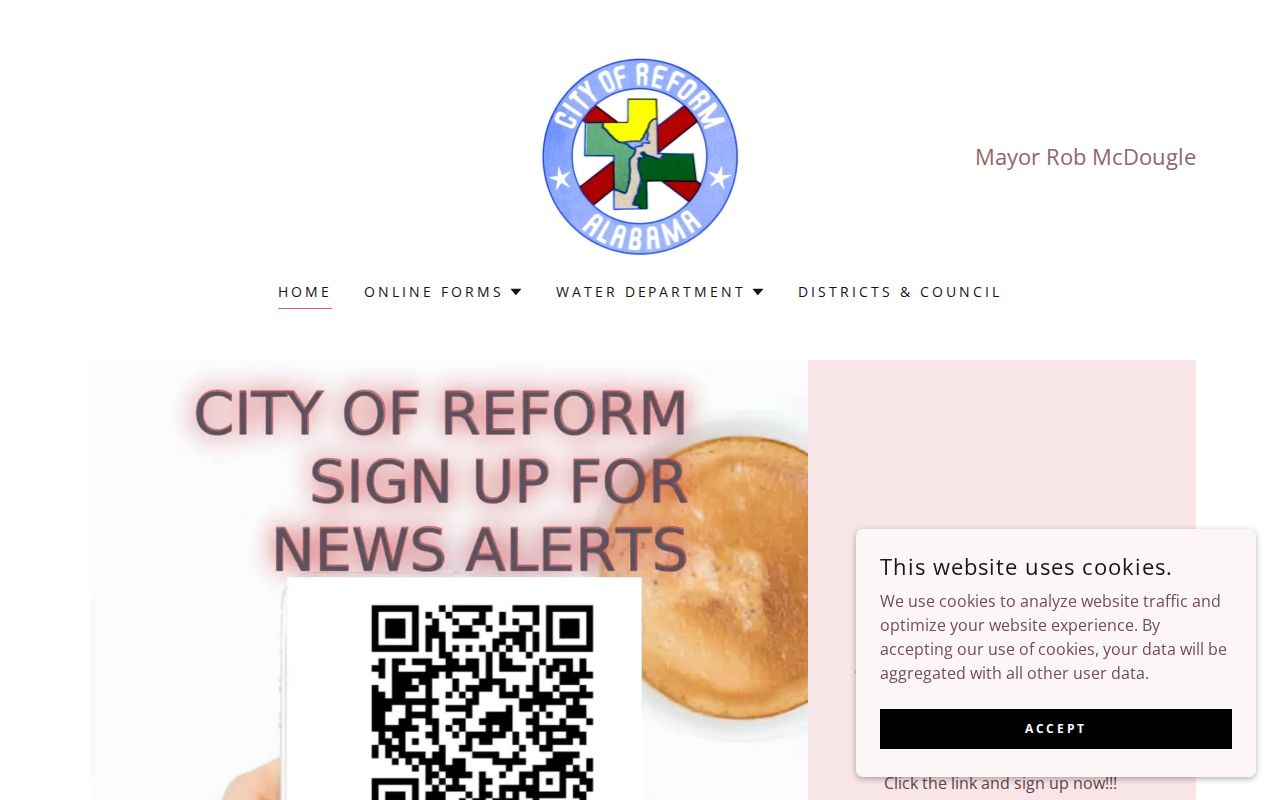
The Reform City Hall image supports the local fallback without implying that the Reform building hosts an online search system. Reform Municipal Building is at 104 3rd Avenue SE, Reform, AL 35481. Reform general hours are 8:00 a.m. to 4:00 p.m., and the number is 205-375-6363.
Ask Reform staff for the current police contact and Reform’s written public-record process. Provide the Reform incident date, location, report number if known, and exact document needed. Since no charge or identification rule is posted, confirm both before submitting a request.
Reform Police Department Records
Reform police records belong with the Reform office that created them, even when another agency later books a person or a court files a charge. Reform City Hall can route a request for the current Reform police contact. PCSO cannot supply a Reform officer’s narrative merely because a county custody record exists.
The official Reform number labeled for after-hours “emergency” use, 205-463-8675, is for Reform municipal-service problems such as water leaks or debris. It is not the Reform police-record line. Use 911 for an active emergency. Use 205-375-6363 for routine Reform records routing and municipal court questions.
Wrong-number caution: Do not use Reform’s water-emergency line for a police report, court record, warrant question, or active law-enforcement emergency.
When part of a report cannot be released, ask whether a redacted copy is available. Investigatory information, juvenile material, child-victim identity, and sensitive identifiers may be limited under Alabama law.
Reform Contact Form Limits
Reform’s general web form contains Name, required Email, Attach Files, Send, and Cancel. Those Reform fields can start a routing question, but the form is not labeled for Reform police reports or court files. It does not publish record categories, proof-of-identity controls, certification options, a fee schedule, or a secure sensitive-data process.
| Name | General text field |
|---|---|
| Required on the city form | |
| Attach Files | Available, but no police-record security guidance is published |
| Records Portal | None located |
| Best Use | Ask where and how to send a formal request |
Do not attach private identity documents, medical data, financial information, or other sensitive material until city staff provides instructions. A brief request for the right custodian and secure channel is enough to begin.
The lack of a dedicated portal should stay visible as a research finding. It should not be filled with an unofficial commercial lookup service.
Reform Arrests and Bookings
No official Reform page identifies a city jail or holding facility. Call City Hall for the current police route, then check the Pickens County Current Inmates or 48 Hour Release choice and call PCSO at 205-367-2000. PCSO is the documented county custody fallback, but official sources do not establish that every Reform detention goes there.
A Reform arrest may create a Reform police narrative, a booking entry, a bond or warrant action, and a Reform court file. Those products can differ. The initial Reform allegation may change when a prosecutor files charges, and a later disposition may dismiss or resolve the case. Booking never proves guilt.
If the roster is offline, telephone confirmation is necessary. Note the booking number and arresting agency when available. Request the narrative from the agency named on the entry, then ask the correct clerk about the filed charge and outcome. The Pickens County arrest lookup gives the full county-level sequence.
Note: A Reform municipal citation is a court record, not evidence of a county booking or custody event.
Verify Reform Court Dates Live
The Reform calendar displayed a municipal court event at the Municipal Building at 4:00 p.m. on July 16, 2026. No durable recurring schedule was published. One dated event cannot support a claim that Reform Municipal Court always meets on a fixed weekday or monthly pattern.
Check the live city calendar and call 205-375-6363 before travel. Bring or state the citation number, printed court date, full name, and charge. Ask whether the schedule changed and whether an appearance is required. A calendar card shows a public event, not the contents or status of an individual case.
When a date was missed, contact the municipal clerk. Do not use the county rule that an unserved warrant is nonpublic to infer that no Reform warrant or court action exists. The clerk can explain the current case status and next approved step.
Municipal Court Records in Reform
Reform Municipal Court handles local misdemeanors within the city’s police jurisdiction. A municipal file may contain a citation or complaint, settings, plea, actions, financial entries, disposition, and sentence information. There is no published online case or payment portal, so lookup and copies run through city staff.
| Court Name | Reform Municipal Court |
|---|---|
| Location | Municipal Building, 104 3rd Avenue SE |
| Case Types Heard | Local traffic and nontraffic misdemeanors |
| Lookup Details | Full name, citation or case number, court date, and charge |
| Copies and Fees | Fee, certification, ID, and turnaround are unpublished |
A municipal misdemeanor is not a Circuit felony file. If a Reform matter becomes part of a county prosecution, contact the Pickens Circuit Clerk. A District or Municipal conviction ordinarily has a 14-day trial-de-novo appeal window to Circuit Court. Confirm any deadline with the clerk.
Reform Court Filed 159 Cases
The Alabama Administrative Office of Courts FY2023 report lists 159 cases filed in Reform Municipal Court and 84 disposed. Filings included 4 DUI, 120 traffic, and 35 nontraffic matters. Traffic therefore made up most of that year’s reported municipal intake.
Those counts describe workload. They do not mean 159 distinct defendants, 159 arrests, or 159 convictions. A filing can involve a citation without jail booking. A disposal count reflects cases completed during the reporting year and need not come from the same group filed that year.
For an individual Reform criminal record, use the clerk’s file. Aggregate court numbers cannot identify a person or show a case outcome.
Where Reform Records Go
Reform criminal records move through different custodians. Reform police create the city report. Municipal court handles local misdemeanors. PCSO may hold a county booking entry, while the Pickens Circuit Clerk keeps District or Circuit cases. ALEA CJIS maintains fingerprint-based state criminal history, subject to reporting and identity matching.
Record flow: Reform Police Department › Reform Municipal Court or Pickens County Courts › Alabama Law Enforcement Agency CJIS
Just One Look is the paid remote Alabama trial-court service, not a guaranteed municipal archive. Form 46 is for a person reviewing their own fingerprint-matched ALEA history. Neither replaces the Reform police narrative or municipal clerk file. For a full county case, use the Pickens County criminal court case route.
Reform Criminal Data in 2024
The FBI Alabama agency directory identifies Reform Police Department by ORI AL0540300. The department has reported through NIBRS since January 1, 2021.
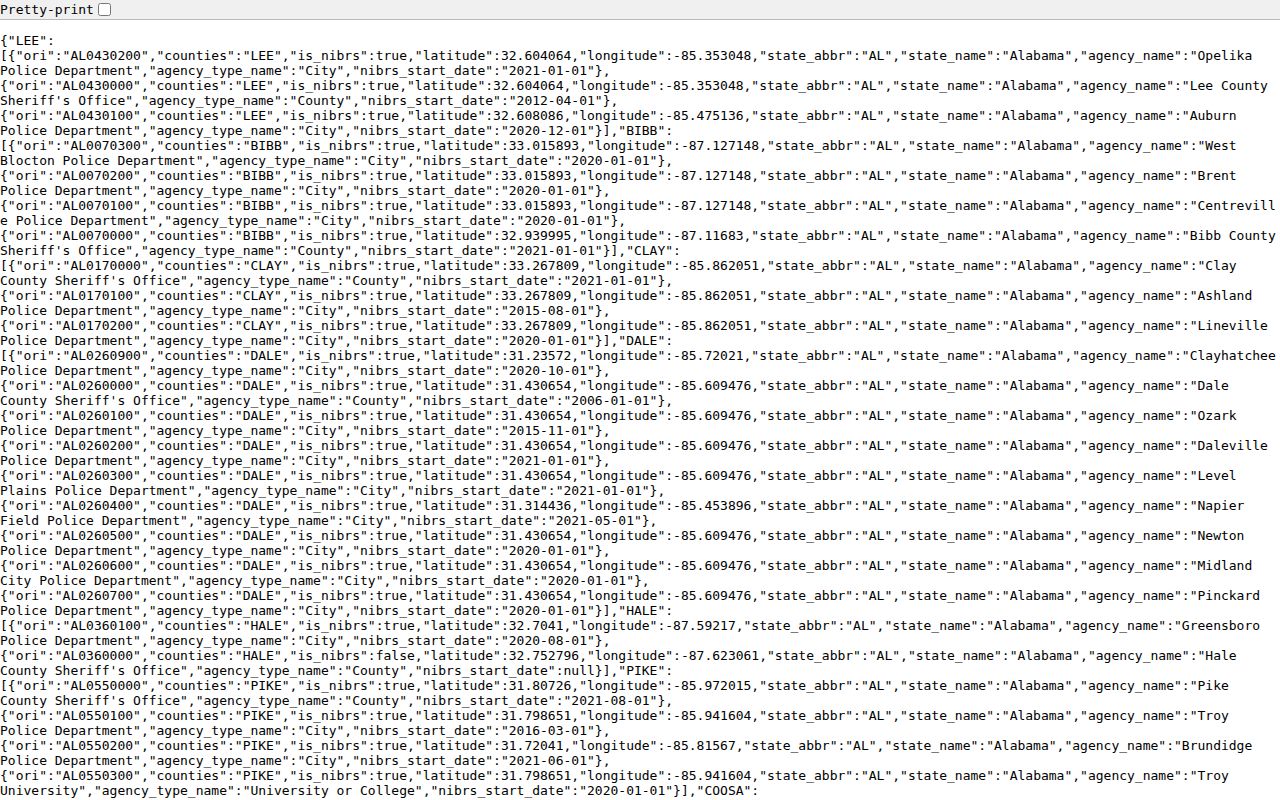
The directory image establishes the agency identifier used for the data, not a public list of people or Reform case records.
Monthly 2024 actuals totaled three violent crimes, all aggravated assaults, and 21 property crimes, including six burglaries and fifteen larceny-thefts. The endpoints returned zero vehicle theft, homicide, robbery, and arson. These are agency-reported counts subject to participation limits. They should not be divided by Reform’s small population without checking complete-month participation and methodology.
Reform Records Across Court Systems
A filmed 2023 Reform roadside encounter later generated proceedings in more than one forum. An Associated Press report on the federal civil-rights litigation describes claims filed over the encounter. Claims in civil litigation are allegations unless adjudicated.

The report image illustrates why one incident can yield local police records, state charge records, and a separate federal civil docket. None should be treated as the final word on another system’s outcome.
WBRC’s background report describes charges being dropped in part of the encounter.
That image connects the charge outcome to the broader record lesson: a police event, dismissed charge, and later civil claim are distinct records. Verify each with its originating court or agency.
Reform Records and Town History
Reform’s official history says the area was a “rawhide settlement” between 1803 and 1812. The city attributes its name to missionary Lorenzo “Crazy” Dow urging residents to reform, with the name appearing in print by 1842. These details are city-attributed local history, not independently proven criminal-record facts.
Incorporation and the railroad both arrived in 1898. The city says 54 whistles sounded daily in 1912 during the lumber era. Corn and cotton remained important after World War II as forestry became dominant. This timeline can help place old Reform street, employer, and institution names found in historical records.
Reform history is context, not a docket. Older police and court searches still require the city, municipal clerk, county clerk, state archive, or other custodian that holds the original file. Ask current staff where an old Reform municipal record was transferred instead of presuming it remains at City Hall.
Public Access Rules in Reform
Reform records are governed by Alabama public-access law and its exceptions. Alabama citizens may seek public writings. That right does not make juvenile, expunged, child-victim, sensitive personal, or lawfully confidential material public. Active investigative information may also be restricted. Ask whether nonexempt parts can be released through redaction.
Key Statutes:
Alabama Code §36-12-40 provides citizen access to public writings, subject to exceptions.
Alabama Code §41-9-601 penalizes false-pretense access to protected criminal-history information and unauthorized disclosure.
Alabama Code §15-1-2 keeps records identifying a child victim of sexual abuse or exploitation from public access.
Reform has not published a police-record fee, certification price, identification rule, or response time. State the exact record and desired format, then confirm the current terms with City Hall. Do not replace missing official details with people-search or mugshot aggregators.